





















Quick Overview
- China has not yet fully implemented a family doctor system, so patients can freely choose hospitals and doctors
- Most Chinese hospitals provide appointment services only in Chinese
- Email is not commonly used in China’s healthcare system
- Online booking is the main way to make appointments
- The main difficulties for foreigners are language and real-name verification
- Public hospitals have the strongest research capacity and doctor resources, while private hospitals offer a better service experience
- Doctors may practice at multiple hospitals, and private hospitals are an important supplementary channel
Background
China has not yet fully implemented a family doctor system, so patients can book appointments or visit hospitals of any level at their discretion.
This brings patients a major convenience:
- If you wish, you can consult multiple specialists in the same or different fields
- After obtaining multiple consultation opinions, you can compare diagnoses and treatment plans
- This largely helps avoid misdiagnosis
- And also enables patients to make the decision that best serves their own interests
Where to Find Appointment Information
Official Hospital Websites
Large hospitals in China generally have official websites, but the vast majority provide only Chinese introductions and Chinese-language appointment services. Only a small number have English pages and English-language appointment services.
You can check doctors’ clinic schedules on the hospital website. Chinese doctors usually run outpatient clinics at fixed weekly times. Outside clinic hours, they also spend a large amount of time in inpatient wards serving hospitalized patients.
Hospital WeChat Official Accounts
If you understand Chinese, or have friends nearby who do, you can also book appointments through the hospital’s WeChat official account.
Most hospitals in China have enabled WeChat appointment services. When you cannot find relevant information on the hospital website, you can also use the WeChat official account to view hospital information and make an appointment.
Appointment Methods
Unlike abroad, where doctors and hospitals can be contacted by email, people in China rarely use email, so it is usually difficult to reach a doctor or hospital via email.
Online Booking
Appointments and payments can be completed through the following channels:
- Hospital website
- Hospital app
- Hospital WeChat official account
- Alipay
- Third-party online healthcare platforms such as WeDoctor
Typical steps include:
- Check the doctor’s schedule
- Complete the booking
- Pay the registration fee or consultation fee online
Phone Booking
Appointments can be made through the hospital’s official phone number or the local 114 service.
This method is not ideal, for reasons including:
- Long waiting times on the phone
- Usually you cannot learn the background information of the doctor in advance
If you want to book the hospital’s international medical department or special medical services department, phone booking is relatively convenient. Because consultation fees in these departments are higher, there are relatively fewer appointment patients.
On-site Booking at the Hospital
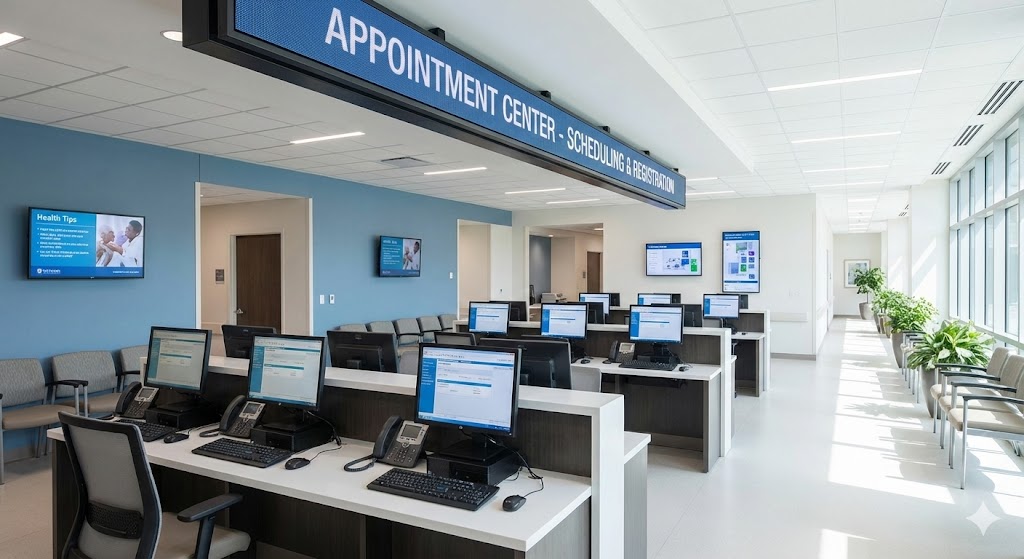
You can go to the appointment window in the outpatient lobby and communicate directly with staff to confirm the time and complete registration.
This method does not allow you to review detailed information about the doctor in advance. If you are already familiar with a doctor, or the hospital is very convenient for you to visit, it is still suitable.
Booking Arranged by the Doctor
There is another appointment method that many people are not aware of but is very important: contacting the doctor through other channels and having the doctor arrange a special appointment for you.
Well-known doctors in large public hospitals in China often undertake research tasks and selectively recruit patients in specific disease areas. If your condition matches the doctor’s research direction, you may still obtain an appointment opportunity through other means even if you cannot book the doctor through regular channels.
Many well-known doctors have enabled online consultation services. You can consult the doctor online first, and the doctor will judge whether your case fits their research direction. If it does, most doctors will help arrange an offline appointment.
China has many online consultation platforms, but almost all are Chinese-only services. If you are looking for a specific doctor but are not sure whether the doctor offers online consultations, you can tell us the doctor’s information. We can help check and let you know the result.
Main Difficulties for Foreigners When Booking
In addition to language barriers, some policy requirements in China (such as real-name verification) also increase the difficulty for foreigners to book appointments.
To register an account on Chinese websites, you almost always need to:
- Verify a Chinese mobile phone number
- Fill in personal identity information
- Complete real-name verification
Solutions for different situations
Foreign patients already in China
- Can go directly to the hospital’s appointment window
- And staff can assist with registering personal information
Patients outside China
If you register and book by yourself, it is quite difficult.
A more feasible approach is:
- Consult the doctor online first
- After confirming that the doctor can be booked
- Have the doctor assist with the follow-up booking process
Characteristics of Chinese Hospitals
Public vs. Private Hospitals
Public hospitals are established by the government. Nearly all of China’s well-known top-tier large hospitals are public, with strong research capabilities, many doctors, and a large patient base.
In recent years, many large public hospitals have continued to expand and set up new campuses. These new campuses usually have significantly better facilities than the old ones. Doctors from the same hospital often rotate among multiple campuses. If possible, it is recommended to prioritize new campuses for treatment.
Private hospitals usually offer better facilities and service experiences than public general hospitals. Because public hospitals have huge daily patient volumes, it is common in China for large public hospitals to exceed 10,000 outpatient visits per day.
Many private hospitals cannot use China’s medical insurance, and their patient volumes are relatively smaller. Therefore, private hospitals often attract patients by improving service quality, and they are more suitable for patients who do not need insurance reimbursement, high-income groups, and foreign patients.
Specialty Hospitals vs. General Hospitals
The vast majority of hospitals in China are general hospitals, with most common clinical departments. Most diseases can be treated at general hospitals.
In addition, a small number of hospitals are specialty hospitals that focus mainly on research and treatment of a certain type of disease, such as:
- Hematology hospitals
- Plastic surgery hospitals
- Dental hospitals
- Eye hospitals
- Thoracic hospitals
- Children’s hospitals
Large specialty hospitals often have stronger overall capabilities in their fields than comparable departments in general hospitals.
Some specialties in a small number of top general hospitals are also very strong, such as the ophthalmology department of Beijing Tongren Hospital and the ophthalmology department of Peking Union Medical College Hospital.
Hospital Classification Levels
Chinese hospitals are divided into three levels:
- Level 1
- Level 2
- Level 3
Each level is further divided into three grades, with the highest being Grade A Tertiary Hospitals.
China has nearly 40,000 hospitals in total, including about 1,800 Grade A tertiary hospitals. Around 100–150 hospitals have very high national or international reputations across different medical fields.
Practice Patterns of Chinese Doctors
Unlike many doctors abroad who do not belong to a single hospital, most public-hospital doctors in China are employed by a specific hospital and primarily practice and see patients there.
With changes in China’s healthcare policies, public-hospital doctors are now allowed, while remaining employed at their primary hospital, to register with other private hospitals and see patients and provide treatment at those private hospitals.
Therefore, if you cannot book your target doctor at the original hospital, you can further check whether the doctor also practices at other private hospitals and book through that private hospital.
Booking Assistance
If you encounter difficulties while searching for a doctor or booking an appointment, you can contact us. We will provide reasonable and feasible booking suggestions.
For relatively simple questions, we will answer for free and reply directly.
If the issue is more complex, we will communicate with you in advance and agree on a reasonable and affordable fee.
We wish you all the best during your medical visit in China.