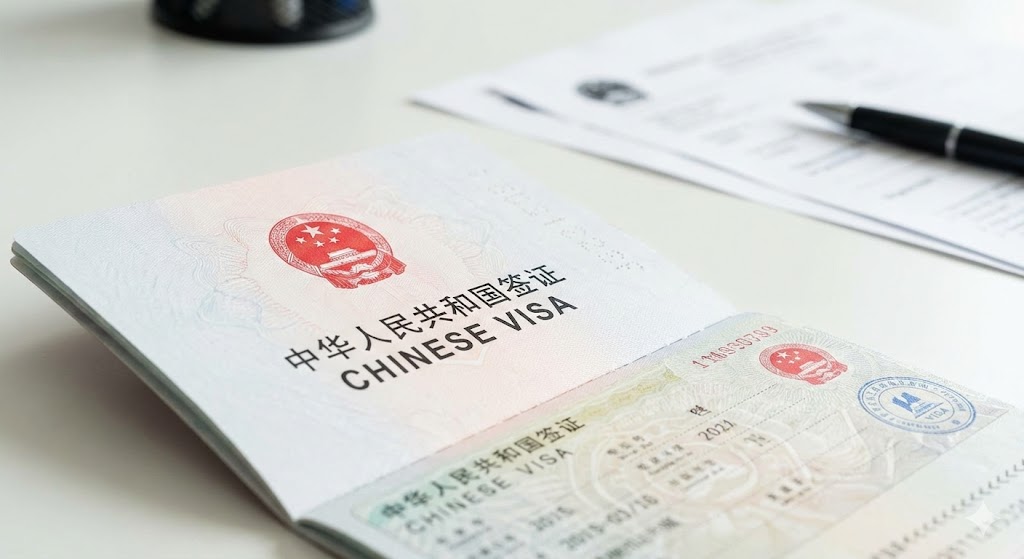
Practical Guide to China Visa Application and Visa-Free Entry (2026 Edition)
This article aims to help foreign nationals traveling to China (especially those entering for medical needs) by introducing visa-free policies, visa types, and the correct application procedures.
China's Visa-Free Entry Policies
Currently, China offers various convenient policies for foreign citizens entering the country, divided into mutual visa exemptions and unilateral visa exemptions.
1. Mutual Visa Exemption Countries
Direct EntryAs of early 2026, citizens holding ordinary passports from about 30 countries, including Malaysia, Singapore 🇸🇬, Thailand, UAE, Qatar, and Belarus, can enter directly, usually for a stay of 30 days.
2. Unilateral Visa Exemption Policy
Trial PolicyTo promote exchange, China has implemented a unilateral visa exemption policy for dozens of countries, including France, Germany, Italy, Netherlands, Spain, Switzerland, Ireland 🇮🇪, Hungary, Austria, Belgium, Luxembourg, Australia 🇦🇺, New Zealand 🇳🇿, Poland, Portugal, Greece, Cyprus, Slovenia, Slovakia, Norway, Finland, Denmark, Iceland, Andorra, Monaco, Liechtenstein, South Korea, Japan, and others.
- Purpose: Business, tourism, visiting relatives and friends, transit, and short-term private affairs (including medical treatment).
- Duration: Cumulative stay of no more than 30 days.
Detailed Explanation of Medical-Related Visa Types
If your medical plan exceeds 30 days, or if you do not belong to the aforementioned visa-free countries, you need to apply for a formal visa.
🎫 1. L Visa (Tourist Visa)
Applicable Planning to come to China for short-term medical check-ups, outpatient consultations, or minor treatments.
Features Low application threshold, stay period is usually 30-90 days.
Limit If a significant extension is needed after entry, the operation is more difficult than the S-class visa.
⚕️ 2. S Class Visa (Private Affairs Visa)
The official name for the S-class visa is "Private Affairs Visa," specifically covering non-tourism and non-business affairs such as medical treatment, litigation, and property handling.
Planned stay does not exceed 180 days. After entry, an extension can be applied for domestically according to treatment progress.
Planned stay exceeds 180 days.
Medical Certification and Domestic Extension Strategy
For patients who are overseas and have not yet obtained a certificate from a Chinese hospital, a "two-step" strategy is recommended:
Step 1 (Entry)
Use the visa-free policy or apply for an L (Tourist) visa to enter first.
Step 2 (Medical Visit)
After entry, go to a hospital qualified to accept foreign guests (usually Grade 3A hospitals or international hospitals) for consultation. Obtain a diagnosis certificate and hospitalization/treatment recommendation, then go to the local Exit-Entry Administration.
Step 3 (Apply for S2)
With the hospital certificate, re-apply for an S2 (Private Affairs) Visa or apply for an extension of the original visa.
⚠️ Important Tips
- Application Time Application must be submitted at least 7 days before the visa expires.
- Language Assistance Some Exit-Entry halls in first-tier cities have English services, but as complex medical terminology is involved, it is recommended to bring a translator or seek assistance through the hospital's international department.
Official Application Channels
Applying for a Chinese visa is mainly done through the following two official platforms, but their functions are clearly divided:
Chinese Visa Application Service Center (CVASC)
Applicable People: Applicants residing in countries where Visa Centers have been established (such as many European countries, Australia 🇦🇺, Canada, Vietnam, etc.).
China Online Visa Application (COVA)
Applicable People: Applicants residing in countries where no Visa Center is established and visa business is accepted directly by Chinese consulates.
This website provides services in 6 languages: Simplified Chinese, English, Arabic, French, Spanish, and Russian.
Note: This website is open to all applicants. The system will automatically judge based on your selected country of residence: if that country has a Visa Service Center, the page will automatically redirect to the corresponding Service Center website for processing.
Need to contact Chinese doctors/hospitals or learn about medical tech & processes? Contact us anytime.
Contact Us
Comments
...