





















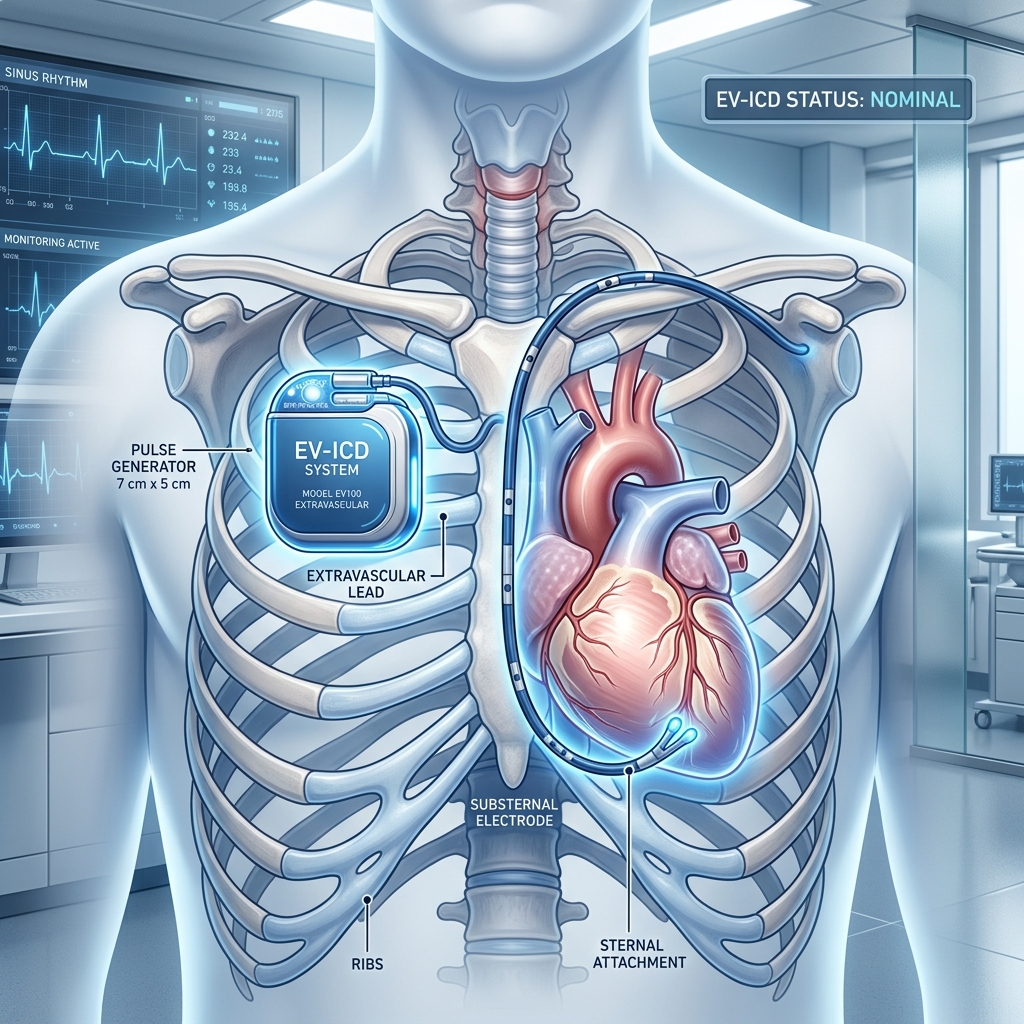
Shanghai Chest Hospital has successfully performed the surgery for the latest version 2.0 extravascular implantable cardioverter defibrillator (EV-ICD) on a high-risk patient who had previously experienced sudden cardiac arrest, pioneering a new era of sudden cardiac death prevention in China.
In recent years, sudden death caused by heart problems has been frequently heard of, becoming a major "invisible" killer endangering national health. On September 22, Dr. Li Ruogu, Director of the Cardiology Department of Shanghai Chest Hospital, led a multidisciplinary team of experts including Dr. Zhang Weiwei, Dr. Huang Jingjuan from the Cardiology Department, and Dr. Fang Liang from the Cardiac Surgery Department, to successfully perform surgery for this cutting-edge treatment.
It is reported that this was the first day this new technology entered clinical application, and only 7 medical institutions nationwide took the lead in performing it. The success of this surgery is not only a new breakthrough in the field of implantable defibrillation treatment in China but also reflects the internationally leading level of diagnosis and treatment of sudden cardiac death at Shanghai Chest Hospital.
The Hidden Danger of Sudden Cardiac Death
Sudden Cardiac Death (SCD) in China
Critical StatisticsAccording to statistics, about 544,000 people experience sudden cardiac death (SCD) every year in China. Because SCD occurs suddenly and is extremely dangerous, mostly outside the hospital, the resuscitation success rate is extremely low, with a survivor rate of only 1-2% in China. An implantable cardioverter defibrillator (ICD) is the most effective treatment measure to prevent sudden cardiac death.
👨⚕️ Expert Insights — Dr. Li Ruogu
"Sudden cardiac death is preventable. The incidence rate in the healthy population is very low, but the incidence in high-risk groups is as high as 2-5%, and for those who have already experienced sudden death, the recurrence rate is as high as 5-25%. Therefore, as long as people develop the habit of regular medical checkups to determine whether they belong to a high-risk group, they can adopt appropriate methods, such as defibrillator implantation, for prevention."
Aunt Hu's Close Call & Traditional Treatments
Aunt Hu, a 65-year-old patient with hypertrophic cardiomyopathy, experienced a sudden cardiac arrest but was fortunately saved by emergency electrical defibrillation. Knowing that it could recur, she sought help at Shanghai Chest Hospital. The medical team explained the two traditional defibrillator options:
💉 1. Transvenous ICD
Implanting the defibrillator directly into the heart via a vein.
- 🟢 Pros: Excellent defibrillation efficacy (direct contact)
- 🔴 Cons: Risk of blood vessel injury, blockage, or cardiac infection
🛡️ 2. Subcutaneous ICD
Implanting the defibrillator under the skin, outside the blood vessels.
- 🟢 Pros: Avoids direct damage to the heart and blood vessels
- 🔴 Cons: Reduced energy efficiency due to the distance from the heart
The Revolutionary Version 2.0 EV-ICD
After learning about defibrillator implantation, Aunt Hu was concerned about the potential vascular injury and infection risks associated with traditional transvenous defibrillation. Moreover, she has an exercise habit and hoped the surgery would have as little impact on her normal life as possible. After fully considering the patient's wishes, Director Li Ruogu led the team to formulate a plan to implant the latest extravascular defibrillator.
Why the 2.0 EV-ICD is a Game-Changer
⚡ Sternum-Heart Placement: Doctors hide the defibrillator's electrodes between the sternum and the heart, covering the surface of the heart like a "Band-Aid".
🌟 Best of Both Worlds: It solves the vascular damage risk of transvenous ICDs while significantly enhancing energy efficiency by bringing the electrode closer to the heart compared to subcutaneous ICDs.
🚀 Global Standard: Approved by the National Medical Products Administration in June 2025, it represents the absolute cutting edge in global implantable defibrillation systems.
Successful Surgery and Recovery
To ensure surgical safety, before the implantation, the cardiology department not only planned the electrode implantation path but also discussed surgical details with cardiac surgery experts and anesthesiologists, fully discussing and preparing for potential issues during the surgery.
Preoperative Planning
Cardiology, Cardiac Surgery, and Anesthesiology collaborated to map out precise electrode pathways and prepare for potential intraoperative scenarios.
Flawless Operation
The substernal electrode was securely anchored with normal electrical parameters, and the defibrillation test was successfully completed.
Rapid Rehabilitation
After only one night of post-operative monitoring, the patient returned to the general ward and is currently in excellent condition.
Information Source: Shanghai Chest Hospital